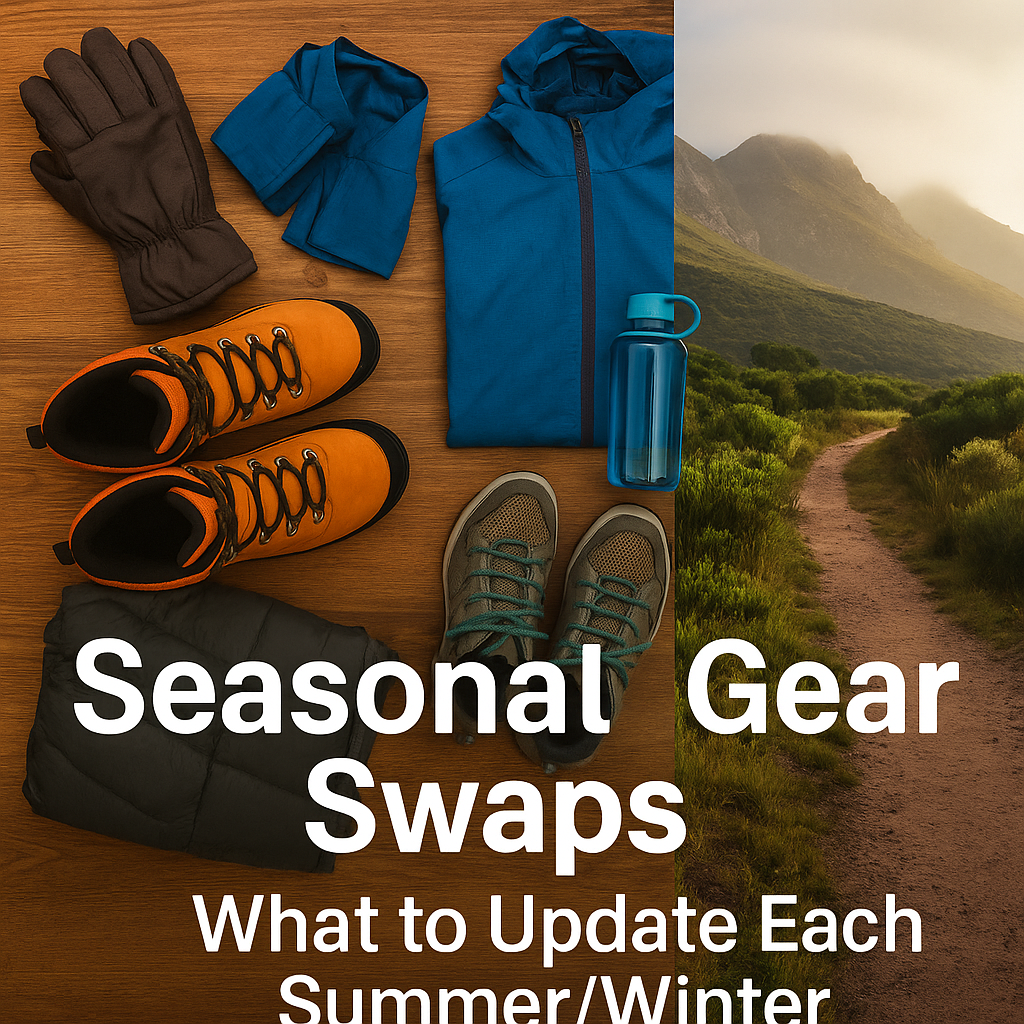
Seasonal Gear Swaps: What to Update Each Summer/Winter
As the seasons shift in South Africa — from crisp winter mornings in the Cederberg to humid summer hikes along the Garden Route — your outdoor gear should shift too. Knowing how to rotate, refresh, and adapt your hiking and camping kit keeps you comfortable, safe, and ready for adventure all year round.
Whether you’re tackling Drakensberg snow or escaping to the coast, this guide will show you what to pack away, what to update, and what to inspect before the next season arrives.
1. Why Seasonal Gear Swaps Matter
Outdoor gear isn’t one-size-fits-all, and South Africa’s climate extremes can put serious strain on equipment. From UV damage in summer to condensation and mildew in winter, seasonal rotation protects both your comfort and your investment.
By swapping out gear seasonally, you can:
- Extend the life of high-value equipment like tents and sleeping bags.
- Prevent damage from heat, moisture, and storage errors.
- Keep your load lighter and more appropriate for the weather.
- Spot maintenance issues before your next trip.
Think of it as spring cleaning for adventurers — practical, preventative, and perfectly timed.
2. Your Summer Gear Refresh (October–March)
South African summers are hot, bright, and unpredictable — with everything from coastal humidity to inland thunderstorms. Lightweight, breathable, and UV-resistant gear becomes your best ally.
What to Swap In:
- Breathable clothing: Moisture-wicking shirts, shorts, and sun-protective fabrics. Avoid heavy synthetics that trap heat.
- Hydration gear: Ensure bladders, bottles, and filters are clean and leak-free. Consider insulated flasks to keep water cool.
- Lightweight sleeping bags: Swap bulky cold-weather bags for ultralight options rated for 10–15°C nights.
- Ventilated boots or trail shoes: Waterproof isn’t always best — go for breathability to prevent blisters and heat build-up.
- Sun protection: Replace expired sunscreen, check hats for UV wear, and refresh sunglasses or visors.
- Summer tents: Choose those with mesh panels and strong UV-resistant flysheets to manage heat and airflow.
Maintenance Tip:
Test all zips, poles, and seams after storage — the combination of heat and humidity can cause glue degradation or fabric stickiness.
3. Your Winter Gear Upgrade (April–September)
Winter in South Africa brings its own challenges — chilly mountain air, damp mornings, and early sunsets. Comfort and warmth become your priorities.
What to Swap In:
- Thermal layers: Replace lightweight summer tops with fleece-lined or merino wool layers. Check elastic cuffs and seams for wear.
- Insulated sleeping bags: Bring out bags rated for 0°C or lower, especially for high-altitude trips.
- Weatherproof jackets: Reproof waterproof shells using specialised sprays or wash-in treatments.
- Boot care: Condition leather boots and check waterproofing before hiking in rain or frost.
- Gas and stove adjustments: Cold weather reduces efficiency — use winter gas canisters or liquid-fuel stoves.
- Extra lighting: Shorter days mean more headlamp time. Replace batteries or switch to rechargeable options.
Maintenance Tip:
Before storing summer gear, clean and air-dry everything — mildew forms fast in sealed containers during cooler months.
4. The Year-Round Essentials
Some gear works in any season — but still needs regular checks to stay reliable.
- Backpacks: Inspect straps, buckles, and stitching. Wash gently and air-dry in the shade.
- Trekking poles: Check locking mechanisms for dust and corrosion.
- First-aid kit: Replace expired medication and restock plasters, antiseptic wipes, and bandages.
- Navigation tools: Ensure compasses, GPS units, and power banks are functional and charged.
- Cooking gear: Clean stoves and check for fuel leaks, rust, or blockages.
A five-minute inspection can prevent costly replacements down the line.
5. Smart Storage Between Seasons
How and where you store your equipment makes a major difference. South African climates — especially coastal and inland humid regions — can quickly ruin gear that’s packed away wet or unprotected.
Store Smart:
- Cool, dry environment: Avoid garages or attics with temperature extremes.
- Keep it breathable: Use cotton or mesh bags instead of plastic for tents and sleeping bags.
- Loosen compression straps: Let gear “breathe” to maintain shape and insulation loft.
- Hang boots: Keeps shape intact and prevents odour build-up.
- Use silica gel packs: Absorb moisture and prevent mould.
Pro Tip: Schedule a “gear day” twice a year — one in April and another in October — to inspect, clean, and rotate your full kit.
6. Upgrading with the Seasons
A great habit is to upgrade a few items each season rather than waiting until something breaks. This keeps your setup current and spreads out costs.
Smart seasonal upgrades:
- Replace worn trekking shoes before a major trip, not after.
- Refresh sleeping pads or mats showing air leaks.
- Upgrade to rechargeable LED lights or solar-powered lanterns for sustainability.
- Swap heavy cookware for titanium or aluminium sets in summer.
Seasonal upgrading isn’t about spending more — it’s about spending smarter.
7. Stay Ready for Every Adventure
Outdoor gear should work as hard as you do — but it also needs time off. Regular rotation, maintenance, and thoughtful upgrades ensure your setup evolves with your adventures.
Whether it’s waterproofing a winter tent or lightening your summer pack, these small seasonal habits add up to big savings and greater comfort.
Explore durable, climate-ready equipment in our Hiking Gear South Africa collection — tested for local conditions and built for every season.