4×4 Overland Essentials: Gear for Off-Grid Camping Adventures
Overlanding — the art of self-reliant, off-grid travel — has become one of South Africa’s fastest-growing outdoor pursuits. Whether you’re tackling Namibia’s dunes, exploring the Karoo’s back roads, or venturing deep into the Kalahari, 4×4 camping offers the freedom to go anywhere — provided you’re properly equipped.
Unlike traditional camping, overlanding demands gear that balances comfort, durability, and independence. Here’s your guide to the must-have 4×4 overland essentials designed for South Africa’s remote terrain.
1. Roof-Top Tents: Your Home Above the Dust
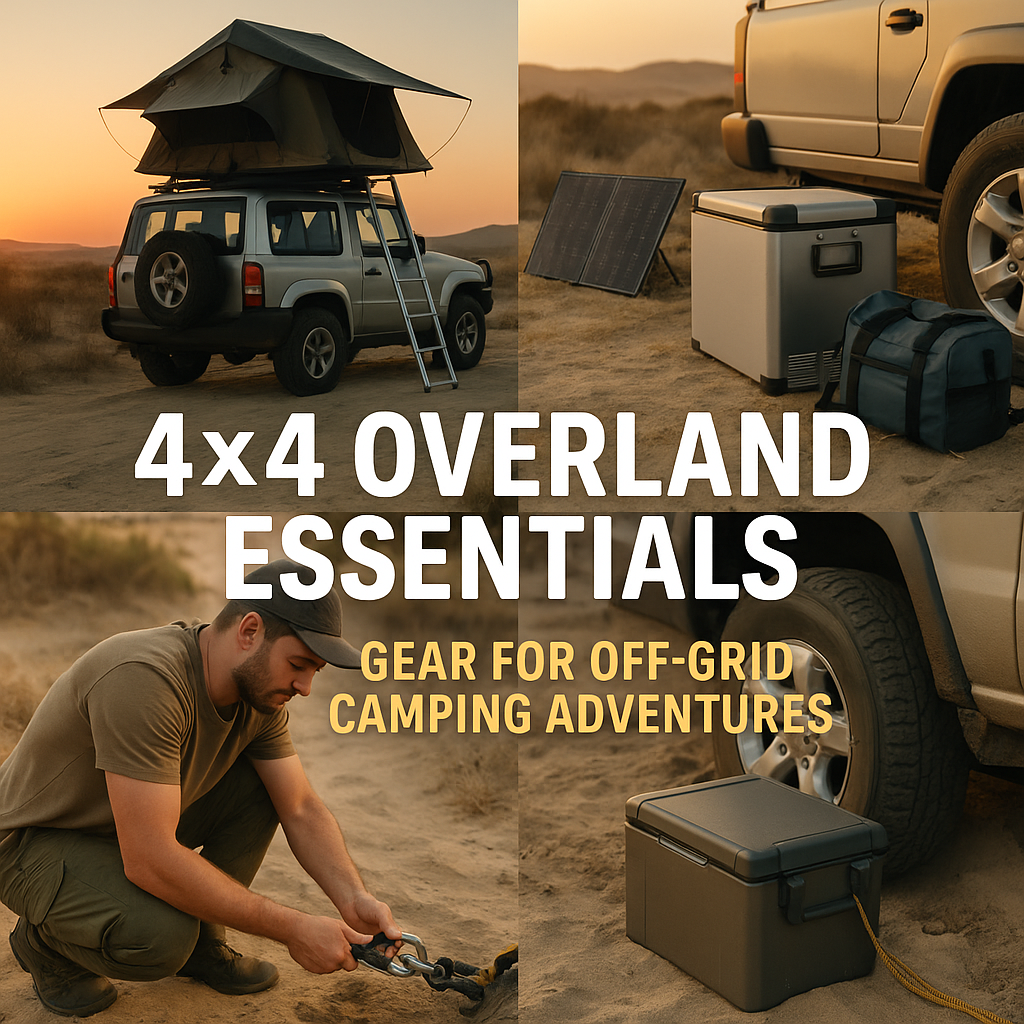
Roof-top tents have revolutionised overlanding, offering comfort and convenience in one package.
Why they’re essential:
- Quick to set up and pack down (ideal for frequent stopovers).
- Elevated from ground moisture, insects, and wildlife.
- Compact and aerodynamically designed to travel on your roof rack.
Top tip:
Opt for a hard-shell roof tent if you travel frequently — they’re more aerodynamic and faster to deploy. South African favourites include Eezi-Awn, Front Runner, and Howling Moon, all engineered for our climate.
2. Dual-Battery Systems: Power When It Matters
When you’re off-grid for days, power management becomes critical.
A dual-battery system allows you to run fridges, lights, and gadgets without draining your vehicle’s main battery.
Essential components:
- DC-DC charger to safely manage charge between batteries.
- Deep-cycle or lithium battery for extended use.
- Solar panels for renewable top-ups on long stays.
Pro Tip:
Install a battery monitor display to keep track of voltage and prevent deep discharge — a common issue on extended trips.
3. Portable Fridge/Freezer: Fresh Food, Anywhere
Forget soggy cooler boxes. A 12V fridge/freezer keeps your supplies fresh for days, even under the Lowveld sun.
What to look for:
- Efficient compressors (e.g. National Luna, Snomaster, Engel).
- Dual compartments for freezing and chilling.
- Insulated covers for added energy efficiency.
Pair it with your dual-battery system for uninterrupted operation.
4. Recovery Gear: Get Unstuck, Stay Safe
Every overlander, no matter how experienced, eventually gets bogged down — sand, mud, or river crossings.
Proper recovery gear can be the difference between a short delay and an overnight rescue.
The recovery checklist:
- Kinetic tow rope or snatch strap
- Rated shackles and recovery points
- Traction boards (essential for sand or mud)
- High-lift jack and spade
- Tyre deflator and compressor for adjusting pressure across terrains
Pro Tip:
Always travel with a companion vehicle or let someone know your route if you’re venturing solo.
5. Water and Fuel Storage: Stay Self-Sufficient
Off-grid means limited refuelling and water access.
Essentials:
- Jerry cans or long-range fuel tanks for extended mileage.
- Water storage tanks or foldable containers (minimum 5 litres per person per day).
- Inline filters or purification tablets if you’ll refill from rivers or boreholes.
Keep your fuel separate from water and label containers clearly.
6. Lighting and Camp Setup
Reliable lighting turns a rough campsite into a functional base.
Consider:
- LED light bars for vehicle setup.
- Rechargeable headlamps and solar lanterns for camp use.
- Foldable tables, awnings, and chairs for shade and comfort.
Pro Tip:
Mount LED strip lights under your awning for hands-free cooking and visibility at night.
7. Navigation and Communication Gear
In remote areas, cell signal is rare. Reliable navigation and emergency communication are non-negotiable.
- Offline GPS maps (Garmin Overlander or Tracks4Africa).
- Satellite communicator (Garmin inReach Mini or ZOLEO).
- Two-way radios for convoy communication.
Backup your digital maps with a paper map and compass — just in case.
8. Maintenance & Emergency Tools
Every overlander should carry a basic repair kit for both vehicle and camp gear:
- Socket and spanner set
- Duct tape, cable ties, and fuses
- Tyre repair plugs and sealant
- Basic medical kit
- Fire extinguisher
Preparation saves time, money, and frustration when things go wrong.
9. Eco-Friendly Overlanding
Responsible overlanding means protecting the wild spaces you explore.
- Use biodegradable soaps and detergents.
- Pack out all waste — Leave No Trace.
- Avoid driving off marked tracks to preserve fragile ecosystems.
- Carry solar panels instead of generators for quiet, clean power.
Conclusion
4×4 overlanding is the ultimate freedom — no schedules, no crowds, just you, your rig, and the open wilderness. But freedom comes with responsibility: the right equipment ensures you stay safe, self-sufficient, and sustainable wherever your adventure takes you.
Explore durable, field-tested gear built for off-grid adventures in our Camping Equipment South Africa collection.