
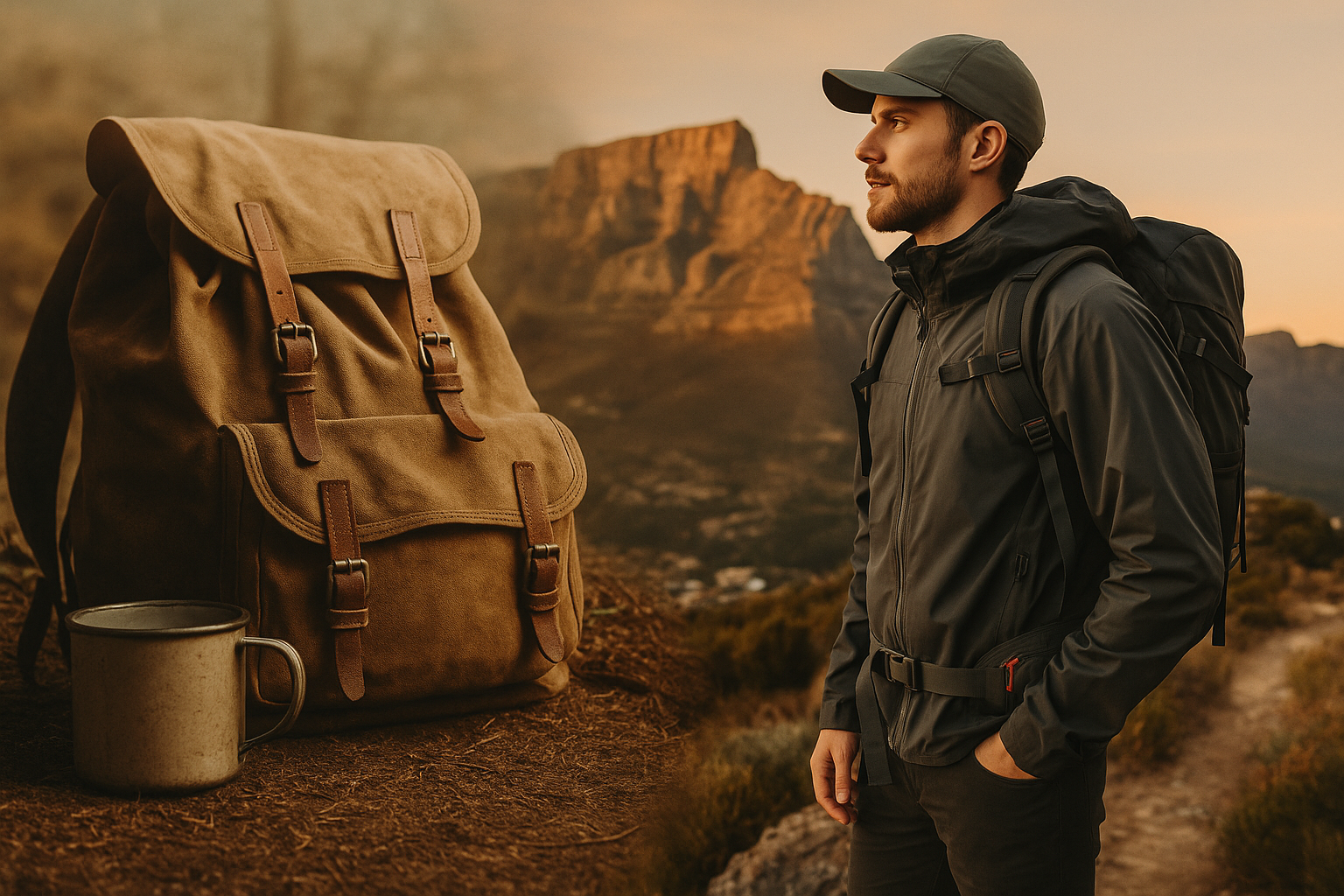
The Evolution of South African Outdoor Gear Over 30 Years
Thirty years ago, hiking in South Africa meant a heavy canvas rucksack, thick wool socks, and a steel-frame tent that could double as a small carport. Gear was rugged — but rarely light. Over the decades, the country’s outdoor industry has transformed dramatically, blending local craftsmanship with global innovation to create equipment designed for Africa’s unique terrain.
From pioneers like Cape Union Mart, K-Way, and First Ascent to today’s cutting-edge gear brands, this evolution tells a story not only of technology but also of passion — the South African drive to explore, adapt, and thrive outdoors.
1. The Early Years: Tough, Heavy, and Built to Last
In the 1990s, South African adventurers didn’t have the luxury of ultralight packs or moisture-wicking fabrics. The focus was on durability and dependability.
Most hiking equipment was locally made, often inspired by military surplus designs — canvas tents, leather boots, and metal-framed backpacks were the norm. Weight wasn’t the enemy; reliability was king.
Campers packed enamel mugs, paraffin lanterns, and wool blankets. While primitive by today’s standards, this gear embodied a rugged simplicity perfectly suited to South Africa’s demanding landscapes.
Local innovation highlight:
Cape Union Mart, founded in 1933, was already establishing itself as the go-to outfitter for South African explorers, supplying expedition gear for everyone from mountaineers to overlanders long before outdoor culture became mainstream.
2. The 2000s: A New Generation of Adventure Gear
By the early 2000s, South Africa’s outdoor scene began catching up with international trends. Materials science, imported components, and local ingenuity combined to create gear that was lighter, more technical, and better adapted to the region’s extreme environments.
Key breakthroughs:
- K-Way, Cape Union Mart’s in-house brand, introduced waterproof-breathable membranes, insulated jackets, and modular backpacks designed for local conditions.
- First Ascent pushed the envelope with adventure-tested tents, thermal base layers, and down sleeping bags at accessible prices.
- Hi-Tec SA introduced hybrid boots tailored for African trails — blending global design with regional practicality.
This was the decade when South Africans began hiking for leisure, not just necessity. Trails like the Otter, Tsitsikamma, and Drakensberg became icons of adventure — and our gear evolved to match that ambition.
3. The 2010s: Global Tech Meets Local Knowledge
As digital design tools, material engineering, and e-commerce matured, the South African outdoor market saw an explosion of accessibility and innovation.
Local brands began competing confidently with international names, leveraging local testing environments — from the freezing Sani Pass to the humid Kruger bush — to refine their products.
The hallmarks of this era:
- Lightweight design: Aluminium replaced steel, and ripstop nylon overtook canvas.
- Performance fabrics: Moisture-wicking, UV-resistant, and quick-drying materials became standard.
- Ergonomic design: Gear now considered body movement and comfort, with adjustable suspension systems and contour-fit boots.
- Sustainability awareness: Many brands began adopting recycled materials and ethical manufacturing practices.
This decade also marked the rise of digital reviews and real-world testing, where South African hikers began sharing their own field experiences online — giving rise to the modern outdoor community we know today.
4. Today: Smart, Sustainable, and Locally Proud
The 2020s have ushered in an era of smart outdoor gear — where connectivity, sustainability, and precision engineering coexist. South African brands have embraced innovation while keeping their deep connection to the land.
Modern trends shaping local gear:
- Solar and rechargeable tech: Portable power banks, solar lanterns, and rechargeable headlamps are standard for campers and overlanders.
- Eco-conscious production: Recycled plastics, organic cottons, and reduced packaging are redefining sustainability.
- Smart textiles: UV-blocking, anti-bacterial, and temperature-regulating fabrics designed for long-term use in harsh climates.
- Modular designs: Backpacks, tents, and clothing systems that adapt to multiple environments — ideal for hikers who move between fynbos, forest, and desert.
What makes this era truly special is that South African outdoor gear now competes globally, while still reflecting the spirit of local adventure. The focus is no longer on mimicking foreign brands, but on crafting gear made for Africa, tested in Africa.
5. The Icons: Cape Union Mart, K-Way, and First Ascent
Each of these homegrown names tells a different chapter of the same story:
- Cape Union Mart: The heritage cornerstone — a trusted outfitter for generations of explorers. Its longevity speaks to an unwavering commitment to quality.
- K-Way: Born from Cape Union Mart, this brand has become synonymous with South African innovation — offering technical gear that holds its own against global labels.
- First Ascent: A proudly South African manufacturer that continues to evolve with every expedition. Its products bridge affordability, performance, and authenticity.
Together, they’ve shaped the modern outdoor experience for millions of South Africans — from first-time hikers to lifelong overlanders.
6. Tomorrow’s Gear: What’s Next?
As outdoor lifestyles continue to grow, future South African gear will likely combine AI-driven design, smart fabrics, and modular functionality — all while staying true to the local principle of practical adventure.
We can expect:
- More locally manufactured gear as sustainability becomes central.
- Cross-industry tech — like bio-based materials and digital mapping integration.
- Greater customisation, letting hikers choose gear configurations that suit their specific journeys.
But through all the innovation, one thing remains constant: South Africans love the outdoors. And our gear will always reflect that — rugged, resourceful, and proudly homegrown.
7. Where Heritage Meets Adventure
The evolution of South African outdoor gear isn’t just about lighter packs or stronger tents — it’s a reflection of who we are as adventurers. From the old canvas tents of the Karoo to today’s ultralight setups tested on the Drakensberg escarpments, every era has brought progress born from passion.
Explore a range of gear that honours this spirit of innovation in Hiking Gear South Africa — a tribute to how far we’ve come and how far we’re still going.


