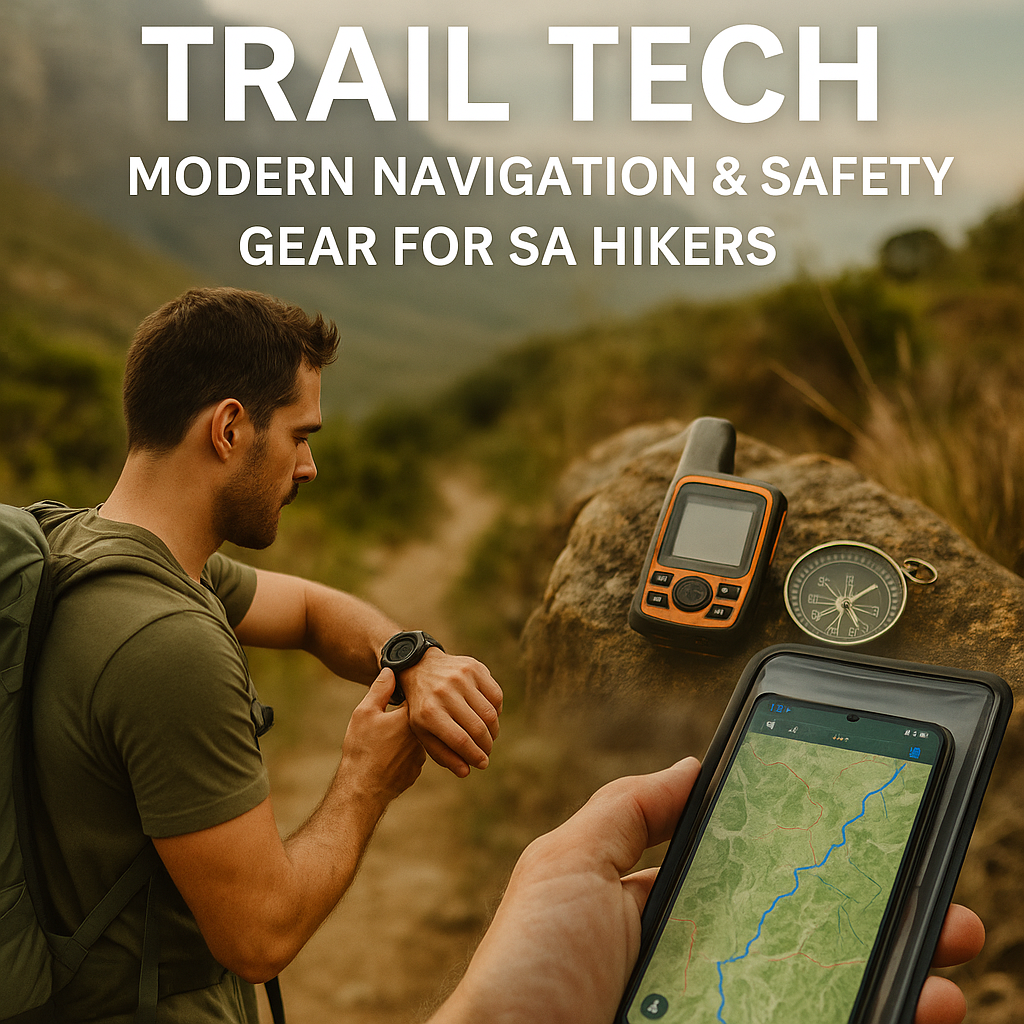
Trail Tech: Modern Navigation & Safety Gear for SA Hikers
Gone are the days when hikers relied solely on a paper map and compass. Today’s South African adventurers are embracing smart technology that enhances navigation, safety, and communication — without losing the spirit of exploration.
From GPS smartwatches to satellite messengers and offline trail apps, the latest trail tech makes outdoor adventures safer, smarter, and better suited to our country’s diverse landscapes, from fynbos-clad peaks to remote Karoo ridgelines.
1. The Rise of Tech on the Trail
Hiking in South Africa offers endless freedom, but it also comes with challenges: unpredictable weather, rugged terrain, and limited cell signal. That’s where technology steps in.
Modern devices now combine navigation, emergency communication, and health tracking in lightweight, durable gear. Whether you’re tackling Table Mountain, the Drakensberg, or the Amatola Trail, these innovations help you hike smarter while staying safe and informed.
2. GPS Smartwatches: Navigation on Your Wrist
Today’s GPS watches are far more than fitness trackers. They act as compact navigation systems capable of tracking distance, altitude, heart rate, and route maps — all while syncing to your phone or operating independently when reception drops.
Top features to look for
• Preloaded topographic maps for remote mountain terrain
• Route tracking and breadcrumb trails to retrace your steps
• Barometric altimeter and compass for offline accuracy
• Multi-day battery life for longer treks
Recommended models
• Garmin Fenix 7 Series: Durable, solar-powered, excellent for multi-day hikes
• Suunto Vertical: Strong altitude and route logging capabilities
• Coros Apex 2: Lightweight and long-lasting for endurance hikers
GPS watches give hikers a data-driven understanding of their route, helping avoid wrong turns and dangerous weather — while doubling as powerful fitness tools.
3. Satellite Messengers: Your Lifeline Beyond Cell Coverage
In regions like the Cederberg, Baviaanskloof, or the Northern Cape, mobile networks disappear quickly. Satellite messengers and emergency beacons have become indispensable for solo hikers and expedition groups.
What they do
• Send SOS alerts directly to rescue services
• Allow two-way messaging without cell signal
• Track your location in real time
• Send check-ins to family and friends
Popular devices
• Garmin inReach Mini 2
• Zoleo Satellite Communicator
• Spot Gen4
For hikers venturing far from civilisation, these devices are true lifesavers.
4. Smartphone Navigation: Smart Apps for Smarter Hikers
Your phone can still be a powerful navigation tool — as long as you download offline maps before hitting the trail.
Recommended apps
• AllTrails
• Strava
• Gaia GPS
• what3words
• Windy or Yr.no for weather
Always carry a fully charged power bank or solar charger when relying on phone-based navigation.
5. Traditional Gear Meets Modern Safety
Even with advanced tech, traditional hiking wisdom still applies. Combine modern tools with classic safety practices:
• Carry a physical map and compass as a backup
• Keep devices in waterproof pouches
• Learn how your tech works before the hike
• Share your route and ETA with someone reliable
Tech should support good judgment, not replace it.
6. Power Management and Sustainability
Power planning is now part of modern hiking.
Smart energy habits
• Bring a solar charger for multi-day routes
• Use battery-saver modes on phones and GPS devices
• Carry multi-port power banks
• Disable unnecessary background apps
Newer devices like solar-charging GPS watches help offset power drain on long missions.
7. Gear Integration: The Connected Hiker
Today’s hiking technology integrates seamlessly across your devices. Your smartwatch tracks pace and elevation, your satellite messenger shares your route, and your phone logs your full trail data for review later. This ecosystem offers complete awareness without adding extra weight.
8. Choosing Tech for South African Conditions
Not all devices are designed for African terrain. Look for dust resistance, waterproof ratings of IPX7 or higher, and long battery endurance.
Western Cape hikers need waterproof, fog-resistant gear for unpredictable weather. In the Kruger or bushveld regions, heat resistance and long battery life become more important.
A balanced setup for multi-day hikes often includes:
• A GPS smartwatch
• A satellite communicator
• A lightweight solar power system
9. Find Trail-Ready Tech
Explore a curated selection of trail-ready equipment in our hiking category at Hunt & Hike. You’ll find GPS units, satellite messengers, compact chargers, and waterproof pouches chosen specifically for South African terrain.
Browse here: https://huntandhike.co.za/hiking-gear-south-africa/
Conclusion
Technology hasn’t replaced the challenge of hiking — it has made it safer. With the right mix of navigation tools, communication devices, and backup power, today’s hikers can explore deeper, stay informed, and react quickly when conditions shift.
Before your next hike, pack more than boots and water — pack the peace of mind that modern trail tech provides.