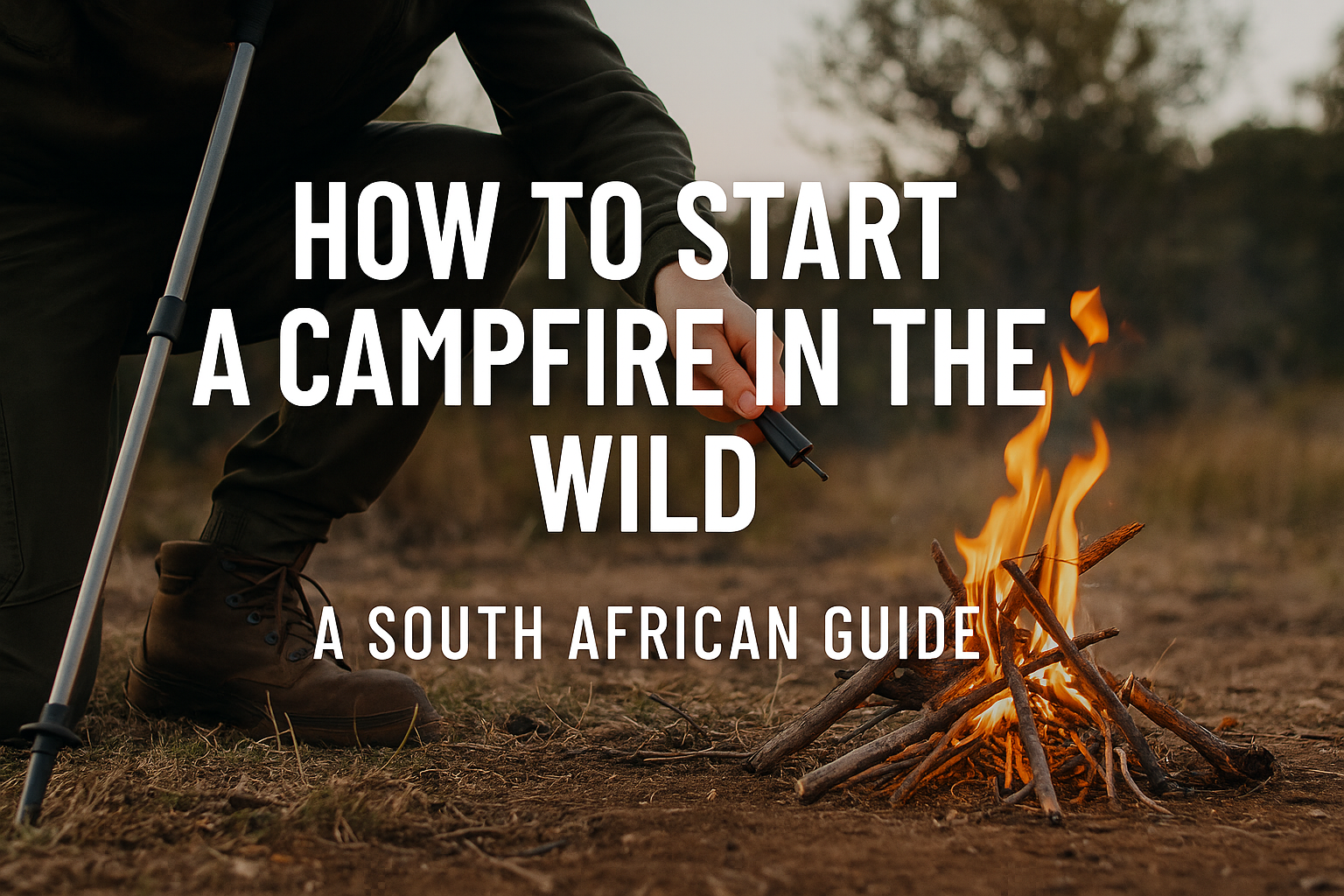
🧭 How to Start a Campfire in the Wild: A South African Guide
Whether you’re hiking the Cedarberg, wild camping in the Kruger outskirts, or bushcrafting in the Drakensberg, few skills are as empowering — or as essential — as building a proper campfire. Done right, it offers warmth, cooking power, protection, and atmosphere. Done wrong, it can be dangerous.
This guide is for beginners and weekend adventurers alike: a step-by-step breakdown of how to safely and effectively start a campfire in the South African wild, using local materials and Leave No Trace principles.
🔥 Why Knowing How to Start a Fire Matters
- Warmth on cold nights
- Cooking food and boiling water
- Keeping predators and bugs away
- Emergency signaling
- Boosting morale in tough conditions
In South Africa, unpredictable weather, remote hiking trails, and wild camping spots make fire-starting a key survival skill — even if you don’t plan to use it every time.
📍 Before You Begin: Safety & Legal Reminders
- Know the fire laws: Fires are often prohibited in national parks and reserves during dry seasons. Always check local regulations.
- Avoid fire bans: During high fire-risk months (typically late winter to spring in SA), open flames are strictly forbidden.
- Use established fire pits when available.
- Always have water and sand nearby to extinguish the fire completely.
🪵 Step 1: Gather the Right Materials
You’ll need three layers of fuel:
🔹 Tinder (the spark-catcher)
Look for dry, fast-burning materials:
- Dry grass
- Shredded bark (e.g., from acacia trees)
- Feathered sticks (thin wood shaved with a knife)
- Cotton balls (or even toilet paper)
- Dried rooikrans leaves or gum tree bark
🔹 Kindling (the flame-builder)
Slightly thicker sticks — dry twigs about the width of a pencil:
- Crack easily when bent
- Look under trees and shrubs where they stay dry
🔹 Fuelwood (sustains the fire)
Thicker branches, wrist-sized or more:
- Hardwoods (acacia, mopane) burn hot and long
- Avoid green or wet wood — it smokes heavily and doesn’t burn well
🔧 Step 2: Build Your Fire Structure
There are several fire layouts, but here are two beginner-friendly ones:
🔸 Teepee Fire
- Place a small bundle of tinder in the center
- Lean kindling sticks around it like a tent
- Add a few larger sticks once it catches
- Great for cooking and warmth
🔸 Log Cabin Fire
- Build a square frame using sticks in a crisscross pattern
- Place tinder in the middle, kindling on top
- Best for longer burns and even cooking surfaces
🔥 Step 3: Light the Fire
You can light your fire with:
- Waterproof matches
- Lighter
- Ferro rod/firestarter (scrape a spark into your tinder)
- Magnesium shavings for wet conditions
Shield the flame from wind with your hands or body, and light the tinder from several sides if needed.
Once the kindling catches, slowly feed larger pieces — but don’t smother the flame.
💡 Fire-Making Tips from the Bushveld
- Use local dry plant matter: Dried aloes, grass, and gum bark are excellent tinder in South Africa.
- Featherstick trick: Use your knife to create fine shavings at the end of a stick. Catches a spark easily.
- Carry a backup: Pack cotton balls soaked in Vaseline as emergency fire starters.
- Dig a windbreak pit in exposed areas — fires burn better with oxygen control.
🧯 Step 4: Extinguish Completely
Before bed or departure, douse your fire with water — not just once.
- Stir the ashes until cold
- Pour water again
- Scatter cooled ashes and naturalise the site if wild camping
No smoke. No heat. No embers.
🛠️ Recommended Gear for Fire-Making
Browse our Hiking Gear for Sale for essential survival tools:
- Fire starters and ferro rods
- Bushcraft knives
- Compact saws and axes
- Fireproof gloves
- Lightweight cooking pots
🌍 Leave No Trace: Fire Ethics in the Wild
- Don’t burn trash or plastic — it’s toxic
- Use dead and downed wood only
- Avoid damaging trees or stripping bark
- Keep fires small and controlled
- Always leave the site cleaner than you found it
🔥 Final Thoughts
Knowing how to make a fire in the wild is more than a survival trick — it’s a connection to your primal self. In the stillness of the bush, as flames flicker and shadows dance, fire becomes comfort, power, and presence.
So the next time you head out, don’t just pack your stove. Pack the knowledge — and respect — to build a fire the old-school way.
Because out here, fire is life.