The Modular Hiking Gear System: Build a 3-Season SA Kit Under R5,000
South African trails ask different things of your kit. Cape wind and rain punish poor shells, the Karoo bakes you dry, and the Drakensberg brings altitude chill. This modular, budget hiking kit shows how to build a flexible, 3-season hiking gear South Africa setup under R5,000—then “swap” components by region and season, without buying everything twice.
How this system works (in short)
- Buy once, build in tiers. Start at a lean “Day-Hike” tier and add components as budget allows.
- Swap, don’t duplicate. One core kit + seasonal add-ons = lighter pack, lower cost.
- Function over brand. Choose specifications (fit, warmth, weather rating) before labels.
Primary targets used naturally below: hiking gear, 3-season hiking gear South Africa, budget hiking kit.
Core layers that do the heavy lifting
Base layer (next-to-skin): Synthetic or merino top that wicks and dries fast. Avoid cotton.
Mid-layer: Lightweight fleece or synthetic active-insulation. Cape/Drakensberg = thicker; Karoo summer = skip or pack ultra-light.
Shell: Windproof, water-resistant jacket with hood (Cape) or wind shell (Karoo). Aim for seam-taped, adjustable cuffs/hem, and a decent hood brim.
Legs: Quick-dry trousers or running tights + light over-trouser for Cape winter days.
Extremities: Buff/hat, thin gloves (Berg mornings), sun sleeves (Karoo).
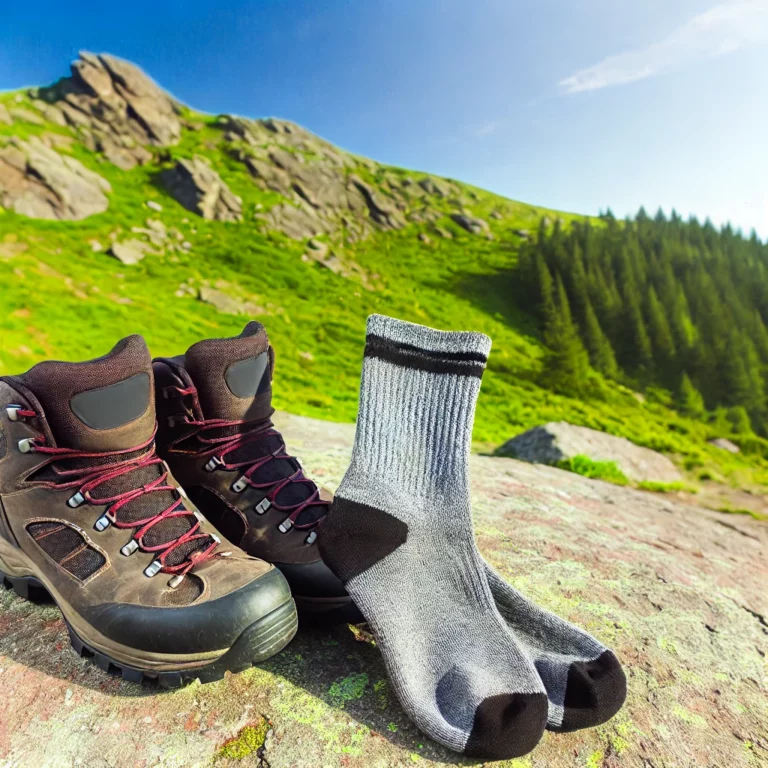
Socks: Two pairs of wicking hiking socks; rotate at lunch to keep blisters down.
Pack capacity by trip length
- Day hike: 15–25 L (water, shell, snacks, basic first-aid, headlamp).
- Overnight: 30–40 L (add warm layers, compact sleep kit, extra food/water).
- 2–3 nights: 45–55 L (insulation, shelter, cooking, more water).
Browse Backpacks that match torso length and hip-belt size; prioritise a supportive frame, breathable back panel, and quick-access pockets.
Fit tips: Load the pack ~8–10 kg in-store; check that the hip-belt carries most of the weight and the shoulder straps don’t cut in. Keep heavy items high and close to your spine.
Water & filtration (Cape, Karoo, Berg)
- How much? Rule of thumb 500–750 ml per hour in temperate weather; 1 L+ per hour in Karoo heat.
- Carry options: 1 L hard bottles (simple, durable) vs 2–3 L bladder (sips on the move). See Bottles. huntandhike.co.za
- Treatment: Tabs or drops for low-sediment water; a compact filter for berg streams after heavy rain or silty farm dams. Pack a backup set of tabs even if you carry a filter.
Lighting: torches & headlamps
Hands-free light wins every time for night hiking, cave sections, or late descents.
- Lumens: 150–300 lm is fine for trail work; 400–600 lm gives extra confidence on technical ground.
- Battery vs rechargeable: Rechargeable saves running costs; carry a small power bank or spare cells.
- IP rating: Aim for splash proof at minimum; rain happens.
Explore Headlamps and pick one with a red mode for map reading.
Emergency & first-aid essentials
- First-aid core: Plasters, sterile pads, crepe bandage, zinc-oxide tape, blister kit, antiseptic wipes/ointment, antihistamine, pain relief, tick remover, space blanket, mini shears, gloves.
- Signalling & nav: Whistle, mini mirror, charged phone with offline maps, small power bank.
- Repair: Needle/thread, safety pins, 1–2 m duct tape wrapped on a card, cable ties.
Keep it streamlined in a bright pouch. Ready-made options: First Aid Kits.
The budget-tiered kit (under R5,000 total)
Use these as spending guides (not brand-specific). Prices vary; keep your running total under the cap.
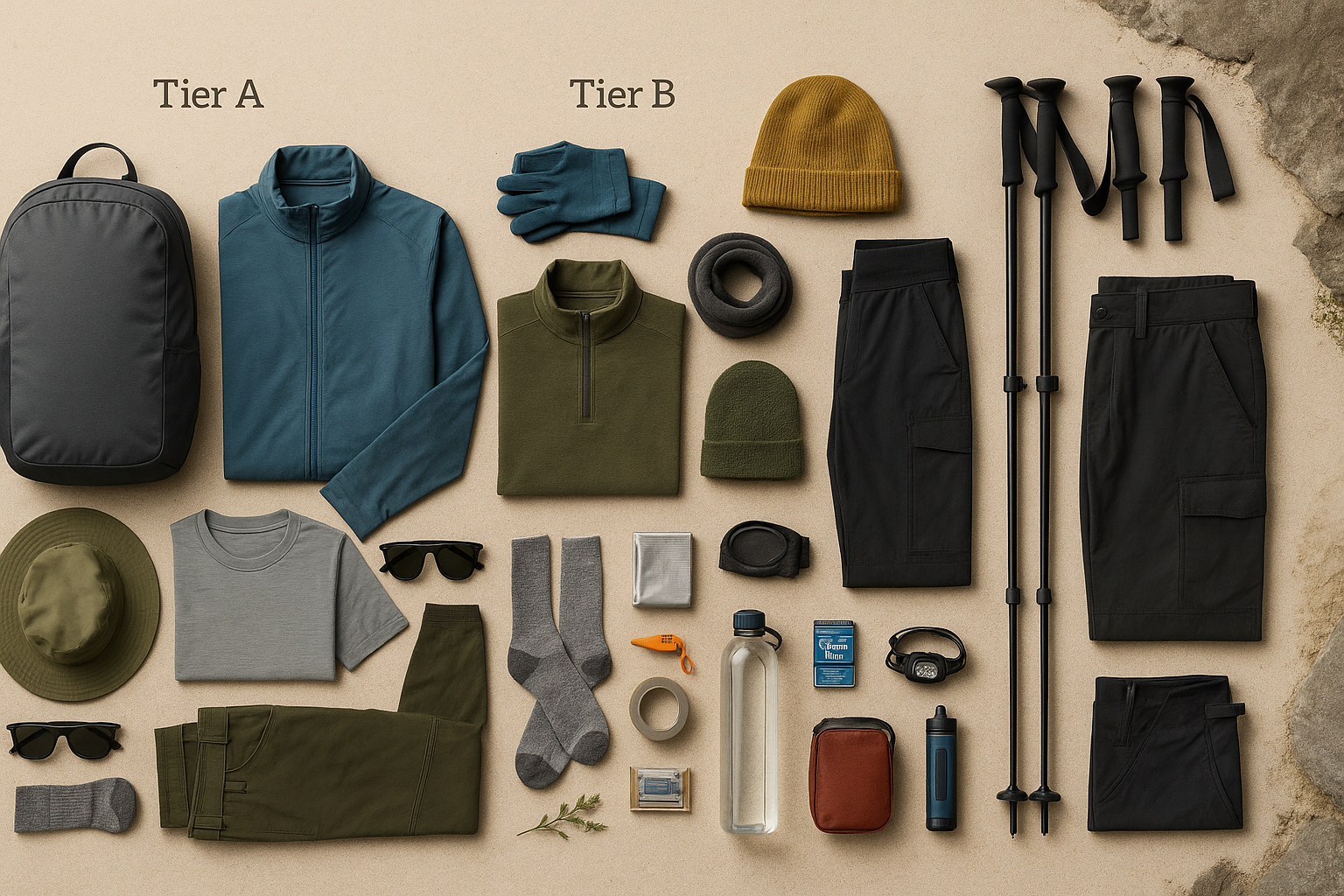
Tier A — Starter Day-Hike (± R1,800–R2,200)
- 15–20 L daypack
- Wicking tee + light fleece
- Wind/water-resistant shell (entry level)
- Cap/buff + sunblock
- 1–2 L water (bottle or bladder)
- Headlamp (basic), whistle, mini first-aid
- Snacks, map/app, phone power bank
Why: Covers most Cape Peninsula, Garden Route, and Magalies day trails in fair weather.
Tier B — Weekender Core (± R3,200–R3,800)
Everything in Tier A plus:
- 30–40 L pack with proper hip-belt
- Warmer mid-layer (Drakensberg-friendly)
- Lightweight over-trouser
- Water treatment (tabs/drops)
- Larger headlamp output or spare cells
Why: Adds weather margin and overnight range.
Tier C — 3-Season Ready (cap at R5,000)
Everything in Tier B plus:
- Upgraded shell (better hood + hydrostatic head)
- Compact filter or extra 1–2 L carry for Karoo routes
- Light gloves, thicker beanie/buff for Berg starts
- Expanded first-aid (space blanket, more tape)
- Small repair kit
Why: Resilient across Cape winter, Karoo summer heat, and Berg shoulder seasons—without overspending.
Swap-in/out table by season & biome
| Season / Biome | Swap In | Swap Out | Why |
|---|---|---|---|
| Cape winter (wind + rain) | Robust shell with good hood; over-trouser; extra mid-layer; dry bags | Ultralight wind shell | Prolonged rain + gusts demand protection and better seam-taping. |
| Karoo summer (heat + dust) | Wide-brim hat, sun sleeves, electrolytes, +1–2 L water, light buff | Thick mid-layer | Intense solar load and scarce water—prioritise shade, skin cover, hydration. |
| Drakensberg shoulder seasons (cold + altitude) | Thicker mid-layer, light gloves, beanie, warmer socks | Minimalist wind shell only | Early/late-season mornings can be sub-zero; wind chill at altitude. |
| Coastal humidity (KZN coast, Lowveld) | Quick-dry base, anti-chafe, anti-fungal foot care | Heavy cotton layers | High moisture = chafe/blister risk; keep fabrics fast-drying. |
Packing list by trip length (printable)
Day hike (essentials): Pack, base + mid, shell, hat/buff, 1–2 L water, snacks, Headlamp, small First Aid Kit, whistle, map/app, phone + power bank, tape wrap, sunblock.
Overnight: As above + warmer layer, sleep kit, extra food, stove/fuel (if allowed), 2–3 L water carry or filter, repair kit, spare socks.
2–3 nights: As overnight + bigger pack, more treatment/filter capacity, extra insulation, spare base top, camp light.
60-second door check: Water, shell, headlamp, phone battery, map offline, whistle, first-aid, snacks.
What to upgrade first (highest ROI)
- Foot comfort: Good socks + tape = fewer blisters.
- Shell: A better hood and seam-taping keeps you moving in Cape storms.
- Lighting: Brighter, longer-lasting headlamp increases safety margin.
- Hydration: A second bottle or bladder and dependable treatment method.
Explore key categories to round out your build:
Backpacks, First Aid Kits, Headlamps, Bottles.
FAQs
What is a 3-season hiking kit in South Africa?
A system that handles Cape winter, Karoo summer, and Berg shoulder seasons with swaps—without a full winter-alpine setup.
How do I stay under R5,000 without compromising safety?
Buy the best-fitting pack and a capable shell, then add mid-layers and lighting as budget allows. Use a bottle + tabs now; add a filter later.
How many litres of water should I carry in summer?
Plan 1 L per hour for hot, exposed Karoo routes; less in shaded coastal or high-altitude conditions. Always carry a treatment backup.
Bottle or bladder for the Drakensberg?
Bladder for steady sipping on climbs; keep a 1 L bottle as a backup and for mixing electrolytes.